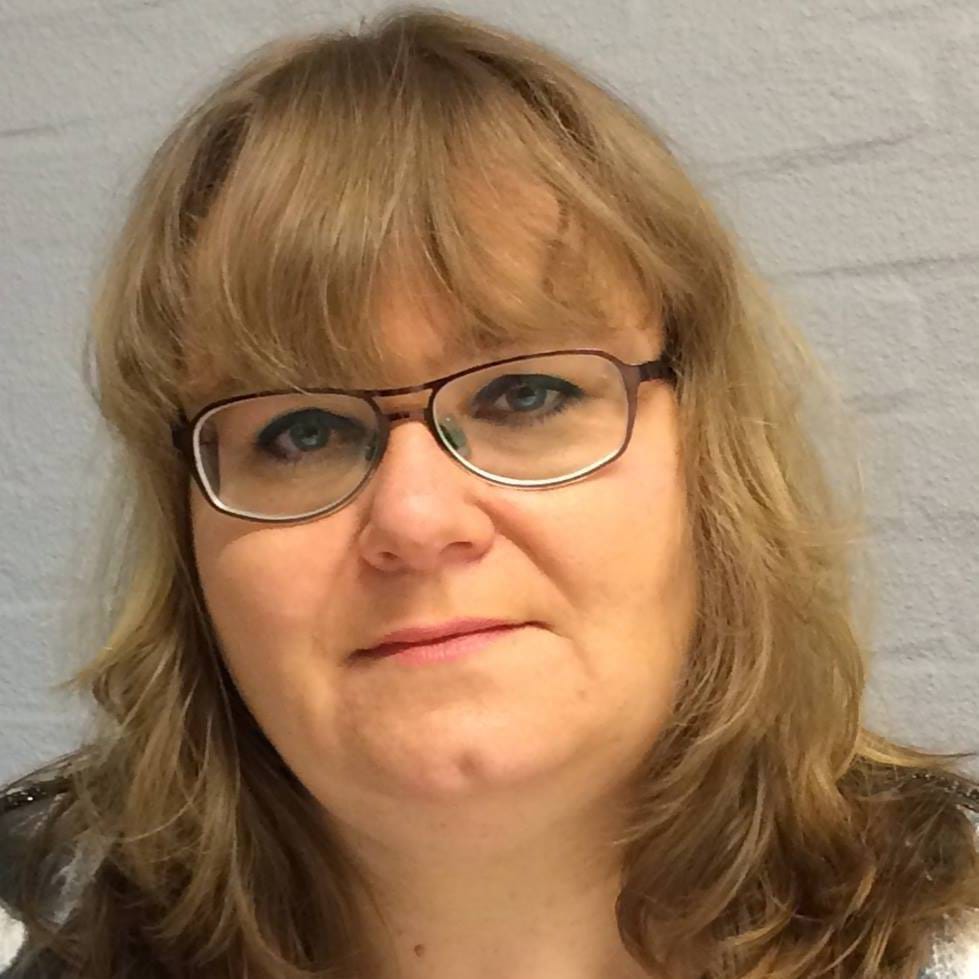
Hello There, Jeanette Junge!
Operations leader for Leader Östra Skåne.
”You participated in Sweden's Rural Parliament from May 24 to 26, 2024. We would like to ask you to reflect on three discussion topics that took a significant and important place during these days.".
”We also want to hear who received the longest applause and the biggest reaction during the days!"
Text: Maria Lundgren, Leader Skåne My Northwest
Photo: Jeanette Junge, Leader Östra Skåne
Has the state abandoned the rural areas?
Only seven percent of rural residents believe that decision-makers at the national level take them into account. 75 percent feel that the state has abandoned them. At the same time, the belief in the future, sense of responsibility, and ability to act are strong. This is shown by a new survey conducted by Indikator Opinion on behalf of the National Organization Hela Sverige ska leva. The survey was presented during this year's Rural Parliament in Nyköping, Södermanland from May 24 to 26. The person responsible for the survey is Josefin Heed.
"The Barometer is an alarm report that articulates the frustration that many feel," says Josefin Heed.
A phenomenal tool for us in Leader
"From a political perspective, the survey is highly alarming. As an operations leader, however, I think that from our perspective, a lot of positive aspects emerge. Many who live in our rural areas emphasize the importance of personal responsibility. Here, Leader plays an incredibly important role in mobilizing the forces that can truly make a difference for our local communities," says Jeanette Junge.
Shows the value of Leader
Jeanette Junge believes that the barometer and our perspective on sustainable rural development are good tools to demonstrate the power of Leader.
"We who work at the Leader offices can, for example, take the report with us when we talk to our municipalities that co-finance our areas. Here we clearly see the value of Leader and the Leader method," says Jeanette Junge.
The report can also be used in all lobbying activities for rural development, as the figures clearly show that rural residents – if they just receive support – can account for an important part of the development where politicians simply fail.
"Few organizations can support the applicant and finance this rural development in the same way as Leader," believes Jeanette Junge.
Three out of four have faith in the future for their place
In the panel that followed the presentation of the Rural Barometer, the survey was discussed, and more actors, like Jeanette Junge, see positive factors in it for an alternative where politicians fail.
Erik Berg from Framtidsfabriken also thought that the numbers showed an interesting paradox. 75 percent have faith in the future of their place and 86 percent believe one should take responsibility for their place. At the same time, they feel abandoned by the politicians.
-It is a story about what the countryside is capable of, an insight that one is part of a fabric of a place that one needs to take responsibility for. At the same time, we lack the conditions to take responsibility.
Difficult to predict the future?
Anthropologist Katarina Graffman asked the audience in the parliament about what the biggest change during the 20th century was. The correct answer was gender equality between men and women. What is particularly exciting about this is that, according to Katarina, no one foresaw it.
It says something interesting about future predictions. The biggest changes may be those we cannot foresee.
Leader's dilemma
Katarina Graffman talked about the importance of understanding the present in order to predict the future. And about the importance of looking at what we do, not what is said. Here Jeanette Junge sees a dilemma.
– Leader is an actor whose results are measured in the present. Our managing authority does not follow up on what it yields in the future. This means that from this perspective, we may have difficulty demonstrating the value of the Leader method.
– At the same time, all the people we meet within Leader are exactly what Graffman highlights, people who really do things, they do not just talk. We know that our projects will actually change the future for their place. Here it becomes contradictory.
It is from the bottom up that the countryside grows when politics has forgotten it, and therein lies the opportunities for Leader. We do not know what the future holds, but imagine what would happen if we were given a little more freedom and they (the authorities) dared to trust that the visions will be fulfilled.
– ”Do not believe in the nice words,” says Graffman. But does it have to be so within Leader? I do not think so, says Jeanette Junge. Our strength lies in our projects' ability to actually realize their visions for their local place.
3 ”It is of utmost importance that the rural areas receive the attention and resources required for all of Sweden to flourish.”
Rural Affairs Minister Peter Kullgren opened Saturday morning in plenary. He said that by developing the rural areas, we strengthen all of Sweden.
”It is of utmost importance that the rural areas receive the attention and resources required for all of Sweden to flourish.”
Shoot outside the post from a rural resident perspective
According to Jeanette Junge, it was an expected speech, politically correct and just right. Likewise, the panel with EU parliamentarians the following day.
The questions they discussed and what was raised often concerned the large overarching issues, and a bit distant for us who live and work in the affected local communities that are being talked about.
– Both Kullgren and the EU parliamentarians in the panel must have all received the rural barometer in their hands. But the lack of trust in politicians and the state was not raised at all during their discussions. Why, wonders Jeanette Junge.
– The survey clearly shows which issues are important for the rural areas. Yet the discussions were held at a level outside of this.
Missing attention and resources
There is talk about the importance of rural areas receiving the attention and resources needed to thrive.
– But we are not getting that, it is not just a feeling among people. Now there are figures that clearly show this. We are not getting the attention or the resources needed, says Jeanette Junge.
– We would have liked a comment from the minister on why the figures for trust in politicians are so low. And what should be done about it. All decision-makers at all levels must work together across borders to ensure that the implementation of the policies they claim to want to carry out can be achieved.
… and the longest applause went to….
Sverker Sörlin!
Professor of environmental history Sverker Sörlin guided the audience through a story about rural areas, green transition, and the importance of knowing together.
Sverker has been a government advisor on research and environmental policy and was a member of the Climate Policy Council from 2018 to 2022. He is a professor of environmental history at KTH.
Sverker Sörlin's speech on Saturday ”TAKING RESPONSIBILITY IS A PREPAREDNESS THOUGHT” was truly everything from high to low, narrow to broad but landed in the idea that life becomes more meaningful when you are involved and take responsibility. He highlighted the place of education in society and felt that it is time to give back to northern Sweden now.
– If we succeed in supporting the current development in northern Sweden, without overriding, for example, the Sámi, we will be admired all over the world, he said. If we do not succeed, our self-respect will disappear and our fourth place as the happiest country will be just a memory, for one needs self-respect to be happy.”
Sörlin spoke about the power of education to counteract polarization and autocratization. By meeting, sharing opinions, and exchanging perspectives, we can find ways forward.
”We need an updated understanding for us residents to become freer and our communities safer. It is about taking responsibility. For oneself, for the country, and for one’s actions,” concludes Jeanette Junge.
Book tip In defense of education - the difficult art of knowing together by Sverker Sörlin.
Rural Parliament 2024 May 23 – 26, 2024.
”BALANCE BETWEEN CITY AND COUNTRY IN A NEW TIME”
The Rural Parliament is Sweden's largest meeting place for rural development. It is held every other year and gathers between 800 to 1000 participants. In 2024, the Rural Parliament was organized in Nyköping, Sörmland. Sweden shall live Sörmland and the National Organization Whole Sweden shall live were hosts for the Rural Parliament 2024. Leader Sörmland was one of the co-organizers.
Leader is an important party in this context and participated both nationally, in the form of Local Development Sweden, and locally from our various leader areas. ELARD also had a representative on site.
Read more about the days and see the entire program and summary reports here:
Rural Parliament's website
Fact box
Local Development Sweden
Local Development Sweden is a resource for promoting and driving issues regarding the leader method in a national and international perspective, as well as for influencing organizations, authorities, and decision-making bodies. Local Development Sweden shall also work to increase knowledge exchange between leader organizations. All 40 leader areas in the program period 2023-2027 are members of LUS.
About ELARD - European cooperation
Membership in Local Development Sweden also entails membership in the European Leader Association for Rural Development (ELARD). The purpose of ELARD is to support rural development using the leader method and to facilitate networking and collaboration through transnational projects.